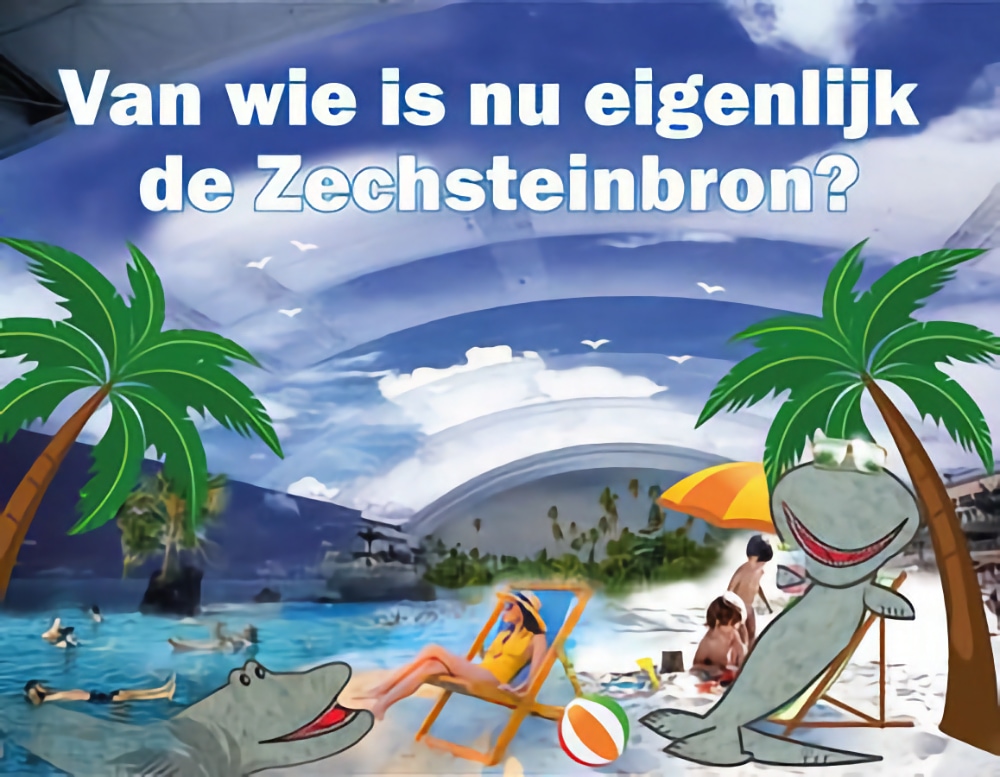
Who actually owns the Zechstein spring?

Beneath Veendam lies the purest magnesium salt source in the world. Who enjoys the benefits, and who bears the burdens?
On Wednesday, December 15th, the Provincial Council adopted a motion calling for the establishment of a regional fund to compensate for damage caused by salt extraction. Magnesium salt mining has delivered impressive results for decades for concession holder Nedmag and its shareholders. But if you listen to local residents or the Water Board, you’ll hear about “excessive land subsidence, housing damage, and stress following an incident in 2018.” Employment—a few hundred jobs—no longer seems to outweigh the costs.
Magnesium Deficiency
As a physician and member of the international scientific society SDRM (Society for Development of Research on Magnesium), I am deeply interested in pure magnesium. We are investigating the global magnesium deficiency in our diet. Something must be done about it because the consequences are far more severe than we ever realized. As president of the Magnesium Health Institute (MHI), I travel the world—to speak at conferences and to share the rapidly growing magnesium knowledge with my colleagues. Fortunately, the University Medical Center Groningen (UMCG) and Radboud University in Nijmegen have also taken up magnesium research.
"This is not commercially interesting, doctor"
It’s been more than ten years since I came to know Nedmag and Zechstein Minerals. Zechstein Minerals aimed, and still aims, to help solve the chronic magnesium deficiency and has established a global network to that end. Nedmag, as a partner of Zechstein Minerals, also began participating in magnesium research introduced by the MHI at UMCG. However, my enthusiasm was somewhat met with pity: “Enough magnesium for the entire global population, even for a hundred years, amounts to at most 1% of our production. That doesn’t move the commercial needle.”
Zechstein Seashore
Additionally, I dreamed of a magnesium spa: like a Zechstein Seashore. A kind of indoor Dead Sea but with the purest natural magnesium salt from the Zechstein source. With wellness, health, recreation, medical research, (residential) tourism, and high-quality employment. As one of the Opportunities for the Peat Colonies. Was I too naïve?
Healthwashing? Opportunities!
In 2018, the roof of a large salt cavern collapsed. Since then, Nedmag has been under scrutiny. Furthermore, stacked mining damage and high gas prices loom large. Health products contribute to improving their image. In the latest December issue of the magazine “Kijk op het Noorden,” nearly half of a Nedmag advertorial focuses on health: Magnesium in your coffee or water bottle. Magnesium in healthy cheese, cake, or bread. You name it. And this naïve doctor? Sees opportunities for the region!
Scenarios for Our Resource
Magnesium salt extraction from the purest source doesn’t have to be a wedge issue, does it? The region bears the burdens and also has the right to the benefits. Health products, a spa like a Zechstein Seashore, can provide much more social value than current industrial production. This also brings high-quality employment, allowing the region to benefit from its Zechstein treasure underground. Yes, we need to talk—with local residents, entrepreneurs, administrators, municipalities, the Province, and of course, with Nedmag. There’s work to be done: this resource belongs to all of us and is something to be proud of!
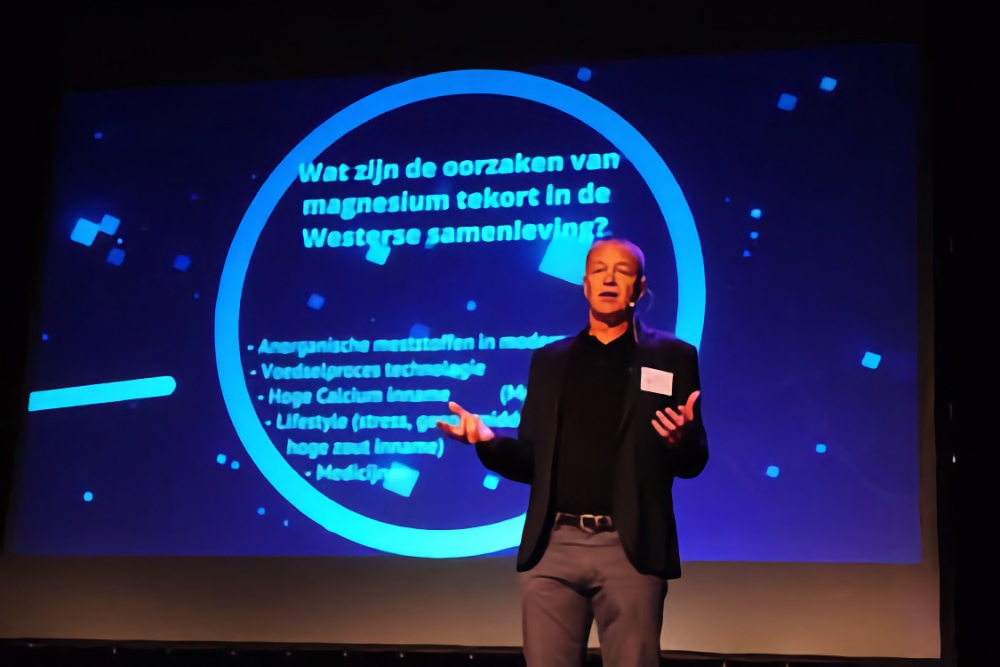
Richard M. Danel, arts en chairman Magnesium Health Institute MHI@soundhealth.onmicrosoft.com